

Curating and the City: Reflections on the ‘Get Online’ Workshop
Doctoral researcher and LUDeC scholarship recipient Polina Chizhova Wright shares reflections on a creative workshop she facilitated.
What role do curators play in facilitating collaborations between artists and city councils on issues such as technology and the socially-just city?
In August 2025, part of my PhD research, I organised the ‘Get Online’ workshop, which was attended by four representatives from the Digital Inclusion team from the Manchester Digital Strategy and two artists whose practice focuses on technology and communities.
Bringing artists together with the public sector or private corporations often opens up questions of context translation and hierarchies. In some cases, even if the participants work in similar fields, they may have different worldviews and working methods. As the curator-researcher-facilitator, my aim was to research how the design of a workshop can support meaningful discussions on a complex topic like digital inclusion within a limited time framework.
Setting the scene
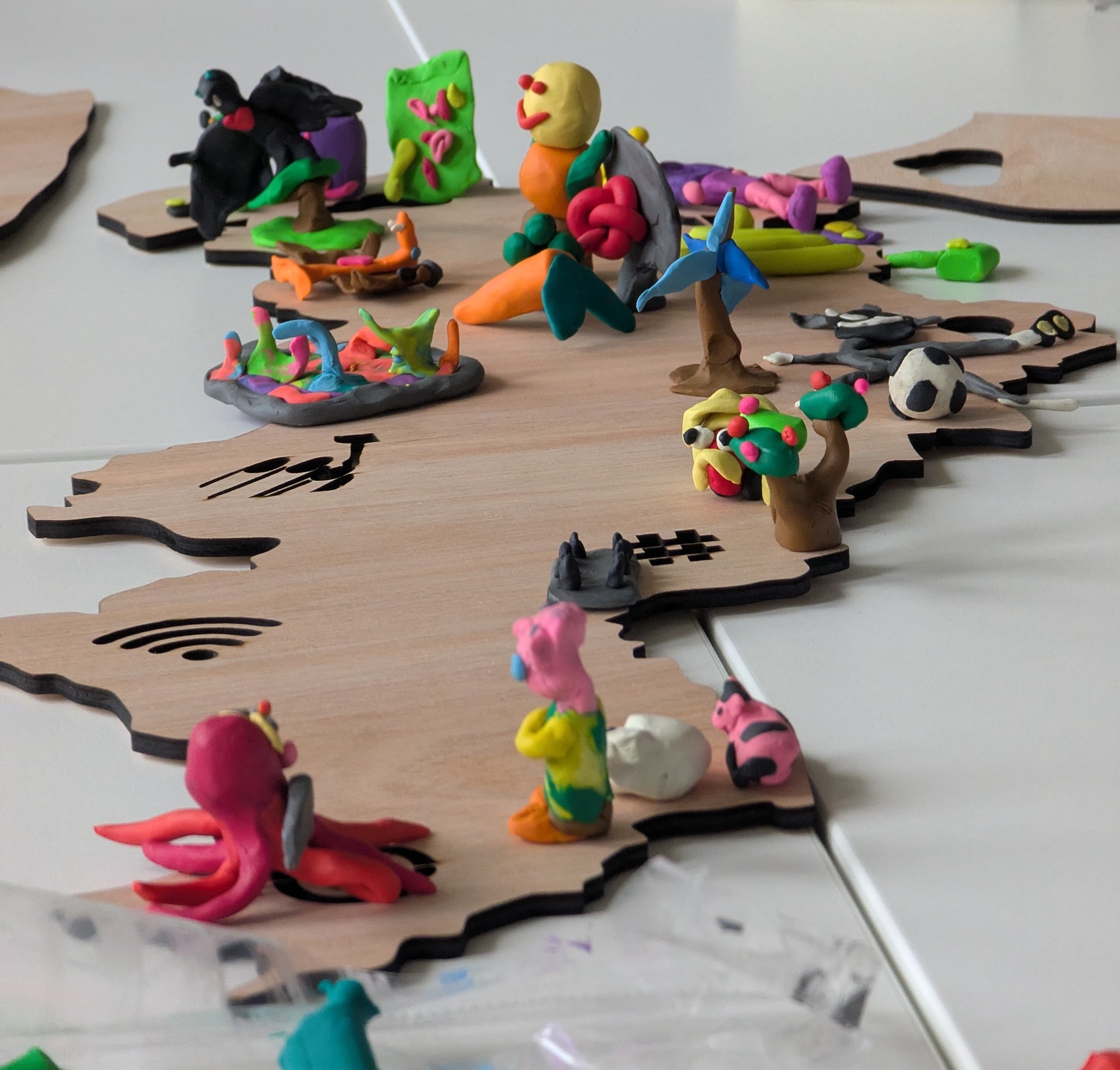
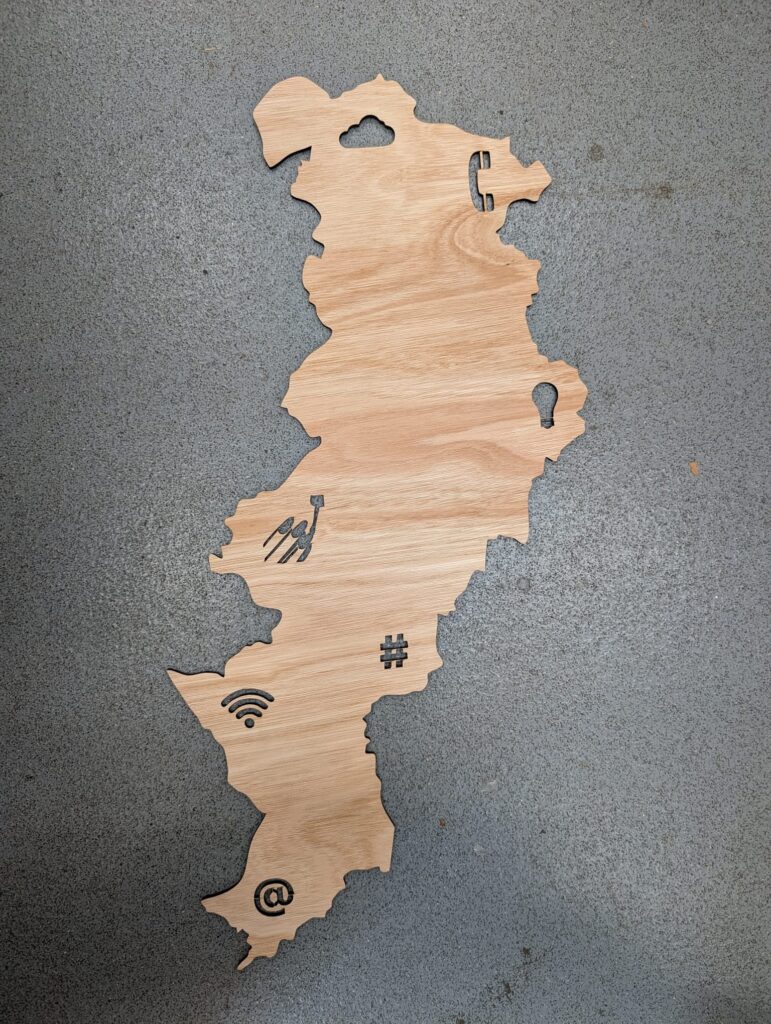
To reflect the embeddedness of the conversation within the Manchester-context (as well as to protect the tables), I designed and laser-cut plywood place mats shaped as different areas of Manchester, as well as central piece that represented the entire area of Manchester City Council. The boards were decorated with digital culture symbols such as the hashtag, nail-polish emoji, the cloud and Wi-Fi symbol, amongst others. The boards were designed to be both a tool to create a feeling of place, as well as to function a conversation starter.
Encouraging conviviality and playfulness
Drawing from methods used in alternative arts education and art mediation, the workshop started with a sequence of playful activities. First, we made plasticine characters to represent:
- a plasticine character who is digitally excluded
- an obstacle that prevents this person from being more digital
- something that pulls this person into becoming more digital
As the stories started to emerge, the plasticine characters were placed on the Manchester City wooden board, acquiring a local context.
To explore the characters further, we made Top Trumps cards. Each character was photographed in the make-shift polaroid photo studio or was drawn by hand on the card, before being allocated stats. This part of the workshop consisted of collective making and laughing at the plasticine sculptures and different invented stories. At the same time it gave the opportunity to the Digital Inclusion team to share their knowledge and previous experience of the Manchester context, while the artists spoke about their work with digitally excluded communities.
The intention to start the workshop with the playful activities was twofold. First, the activities served as an ice-breaker and opportunity for the participants to get to know each other. By sculpting with plasticine, the participants were encouraged to enter a state of making, which has been consistently demonstrated by research to reduce stress and enhance social connection. Secondly, the hands-on activities provided a setting to exchange knowledge on digital exclusion in a less formal manner, using creativity as a tool for self-expression and sharing. Overall, this part of the workshop helped to shape a relaxed and open atmosphere, where facts could be shared alongside ideas, allowing for imagination and collective brain-mapping.
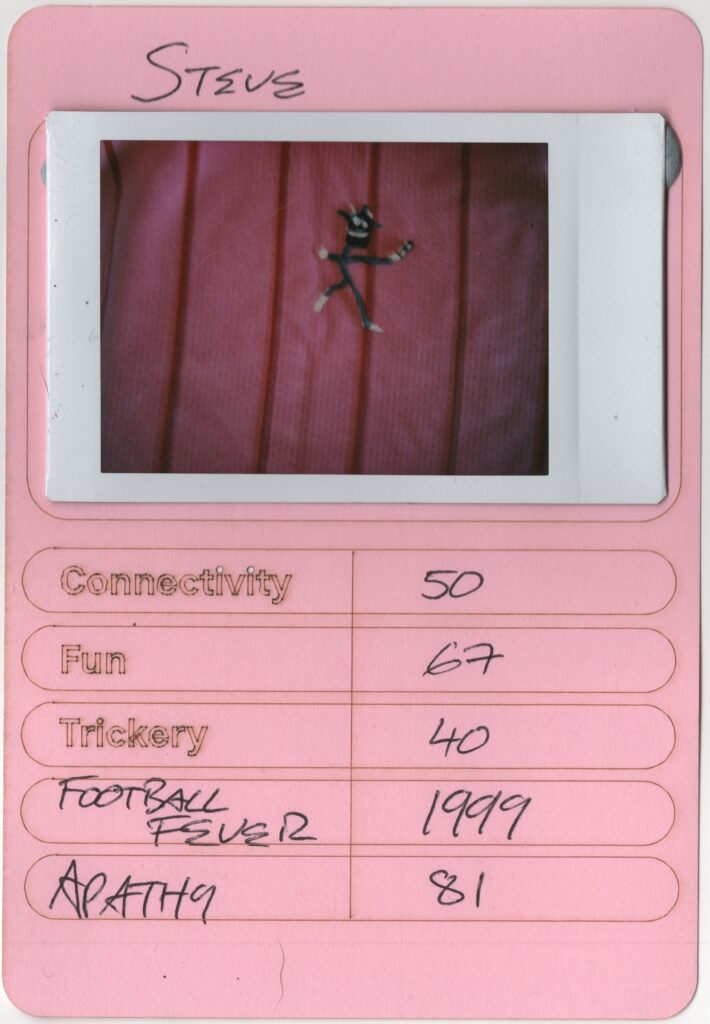
One participant created the character Steve, a football enthusiast who gradually overcomes his disinterest of the digital by watching a a free football news channel on Youtube.
Combining creative approaches with digital inclusion
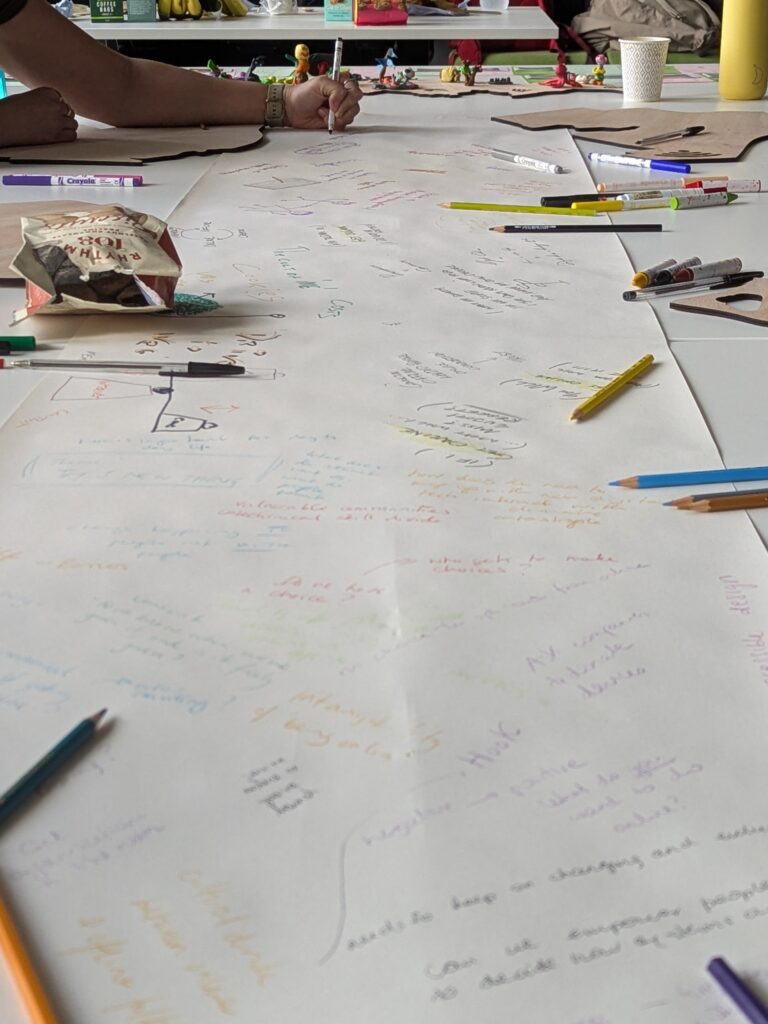
The second part of the session reversed the dynamics of expertise with a focus on creative approaches to working with technology and communities. With the plasticine characters in the background, we continued the workshop with an informal conversation, while writing notes and ideas on a shared long roll of paper placed in the centre of the table. The participants’ generosity in sharing perspectives and experiences struck me, and I learned a lot from our conversation.
How effective was my workshop design?
From my perspective as the facilitator and co-participant, my impression of the workshop was positive – the participants were in conversation throughout learning from each other’s perspectives, many interesting ideas were shared and explored, and there was space for participants to imagine and speculate together. The participants’ feedback confirms my perception. Several participants highlighted that the workshop format helped to open up serious conversations and to engage on a more speculative level, emphasising that the conversation would have been different if this approach was not taken. Moreover, another participant shared that they enjoyed thinking in a different way and found the plasticine activity a great way to support ideation.
In the survey, participants were also asked about the role of the curator in supporting the involvement of artists in decisions on technology and social inclusion in cities. Participants mentioned the ability of curators to speak ‘both’ languages, referring to the differences in terminology in local government and in creative practice. Notably, the curator was also perceived as a figure who can bring together two different worlds, giving council workers an opportunity to work with artists, who tend to have a very different background. Additionally, the curator was seen as an advocate for artists and their practice in a context that is less familiar with creative approaches. Finally, the curator’s role was also perceived to sustain long-term relationships between artists and the council, which was seen as a challenge.
The overall feedback received confirmed the value of creative approaches in the context of technology and cities, as well as using the creative workshop as a format for collaboration between local governments and artists. As the role of the ‘city curator’, focusing on the public realm, events and public art projects, is emerging across European cities like Hamburg, Trenčín or Birmingham, is there a need for another type of city curator who, embedded in the city’s infrastructure, will drive, facilitate and translate creative collaborations between local governments and artists?